
Last July, I had the opportunity to visit our hazelnut project in Georgia, which was funded by the Modernization of Vocational Education and Training System related to Agriculture in Georgia programme of the Swiss Agency for Development and Cooperation (SDC) in Georgia, in co-operation with the UN Development Programme (UNDP) in Georgia.
During my trip to Georgia, I had some insightful conversations with small-scale hazelnut farmers in the Samegrelo region. The producers encountered supportive factors and obstacles in their endeavours to achieve sustainable and high-quality hazelnut production for the Fairtrade and organic market. By the time I returned home, my backpack was full of valuable insights, including the following:
- Work is costly, and organic production is labor-intense. In a context that is marked by out-migration, efficiency is a solution and can be achieved through good agricultural practices and mechanization. Intelligent support (e.g. subsidized group purchase) will allow farmers to access equipment in a way that strengthens ownership.
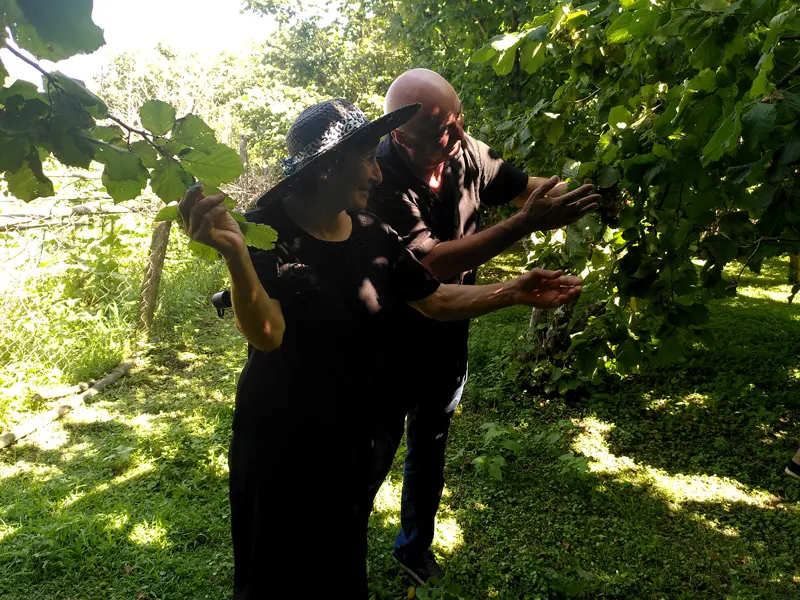
Picture: Ineza Bigvava, Temur Bokuchava (from left to right)
- There is no level playing field for organic farmers where conventional agricultural practices remain the norm. Innovation in sustainable agriculture would benefit all farmers, along with biodiversity, soil and water resources. We thank public partners in Georgia for a promising collaboration that allowed organic farmers accessing first public services.
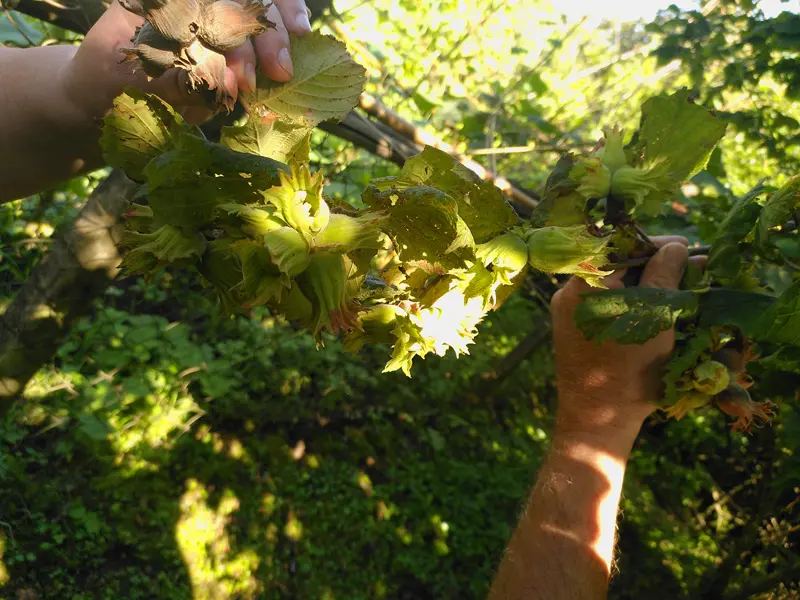
- Support provided by the project Modernization of Vocational Education and Training (MVET) System related to Agriculture in Georgia was highly appreciated by farmers, both women and men. New practices that were tested on demonstration plots, discussed with farmers and shared in training and advice allowed farmers to continue adaptation to climate change and to enhance productivity, quality and hence income.
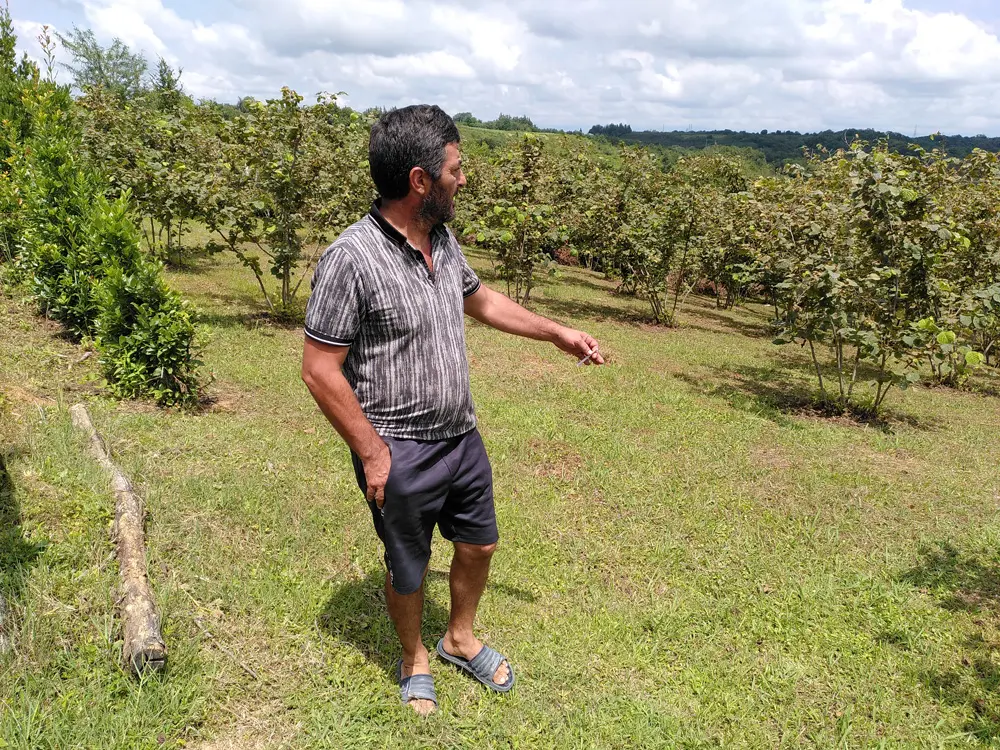
Image: Ramaz Ivanelashvili
- Prize is decisive, and fairtrade premiums are very effective. In addition, reduction of harvest losses will increase farmers’ income significantly. We will continue supporting farmers in their efforts to produce high-quality nuts in a sustainable way, and in facilitating their access to markets that compensate farmers with premiums and the income they deserve.
The Pakka Foundation, in partnership with Pakka Georgia and Nut Cultivation Company (NCC), heartly thank the Swiss Agency for Development and Cooperation (SDC) in Georgia, the UN Development Programme (UNDP) in Georgia and the Government of Georgia for their constructive support, helpful coordination and strategic steering that allowed us to provide the important support to smallholder hazelnut farmers in Samegrelo. The marketing of hazelnuts by companies such as Pakka AG and Gebana allowed producers access to important premium payments.