
Pakka raisins come from the region around Samarkand in Uzbekistan. There, small farming families have been cultivating local grape varieties for generations, most of which are only found in this region. Particularly characteristic are the black Bukhara raisin and the green Khorog raisin, both of which are dried in the shade on the vine using traditional methods.
Our processing partner Silk Road Organik Foods works closely with the smallholder cooperative Turob Bobo. Around 300 families along the historic Silk Road are organised in the cooperative. This collaboration creates reliable sales markets, fair working conditions and long-term prospects for the local people.
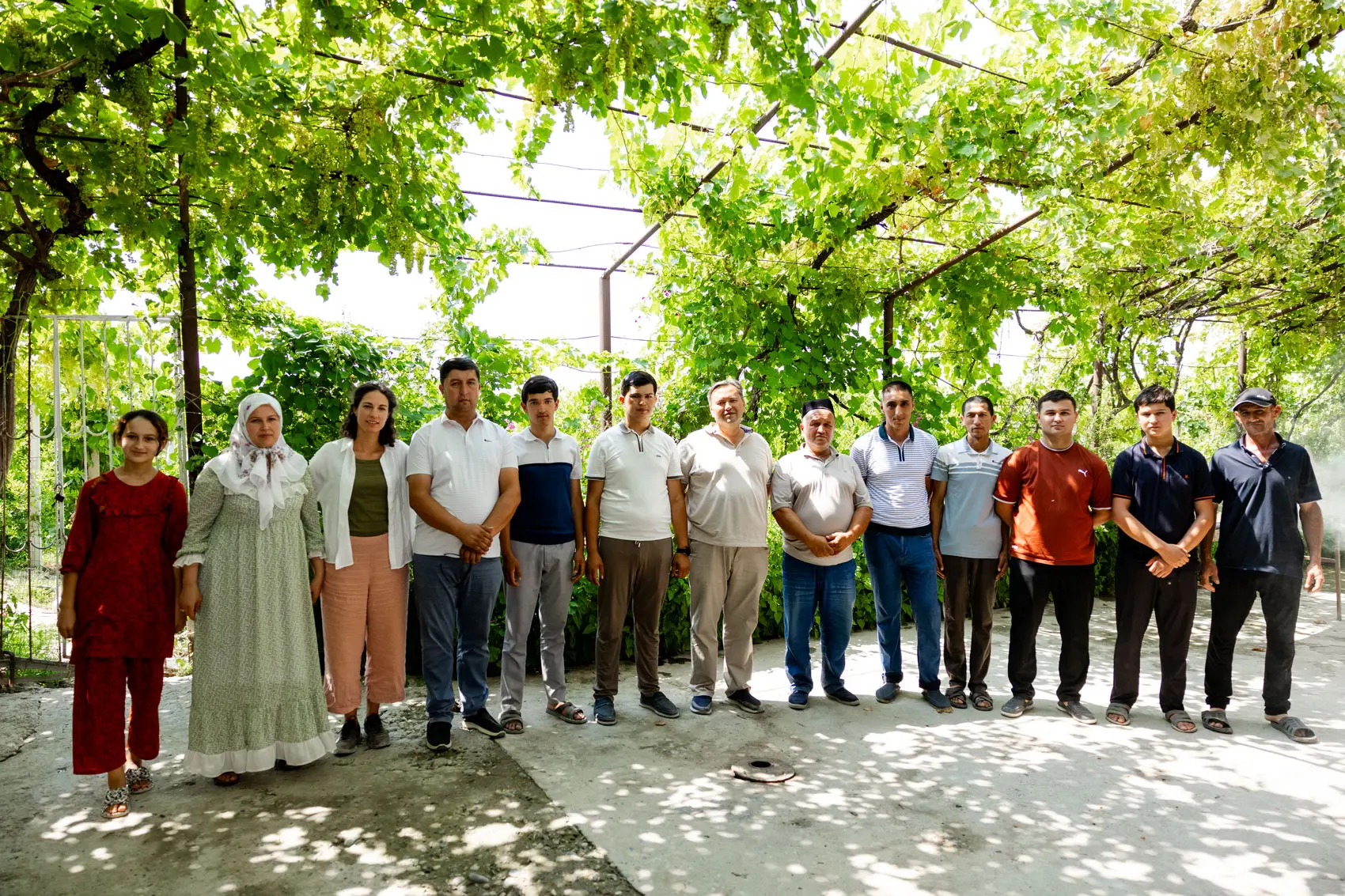 Image: Members of the Turob Bobo smallholder cooperative. © Bahodirov Bahtior
Grape growing with tradition and adaptation to the climate
Grapes are among the region's most important agricultural products. They are cultivated using a traditional method in which the vines grow on the ground. This method protects both the fruit and the soil from the intense Uzbek sun.
A system of pits and dams ensures that rainwater and meltwater are used efficiently. In a water-scarce country like Uzbekistan, this is a crucial factor. At the same time, the intense sunlight leads to a particularly high sugar content in the grapes. The Oechsle degrees are higher than those of many European varieties and form the basis for aromatic, naturally sweet raisins.
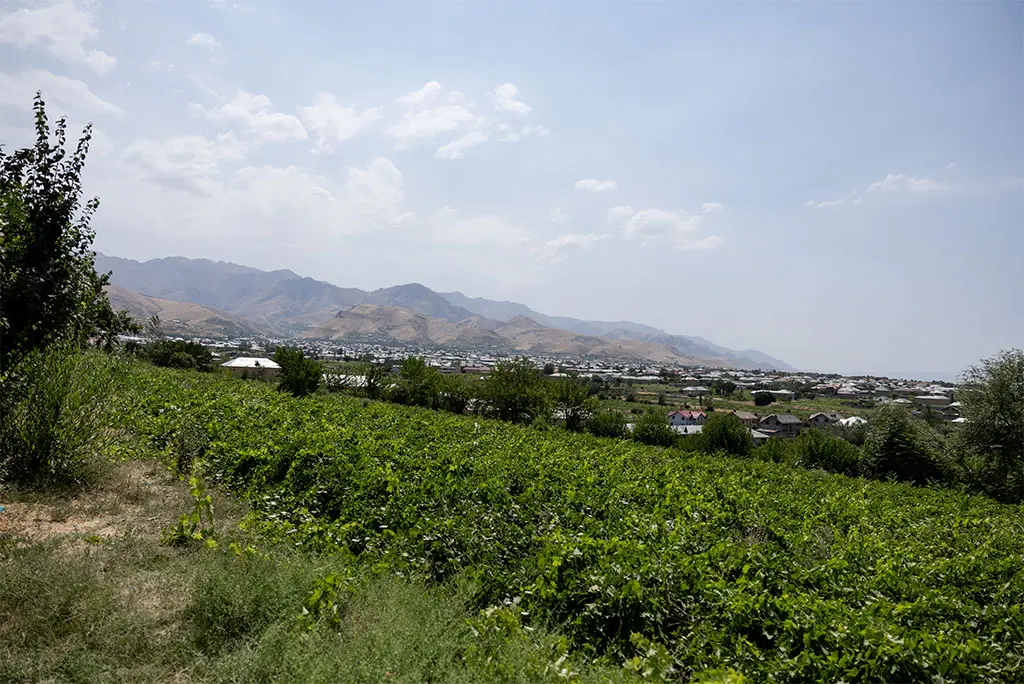
Image: Grape cultivation on the ground, without tying to wire frames. © Bahodirov Bahtior
Black Bukhara and green Khorog raisins
After harvesting, the grapes are dried either in the sun or traditionally in the shade at a maximum temperature of 35 °C. Black Bukhara raisins and green Khorog raisins are dried directly on the bunch in the shade.
This gentle shade drying process prevents the natural fruit sugar from caramelising. The raisins retain their original grape aroma:
- Black Bukhara raisins are characterised by a sweet, fruity, intense aroma.
- Green Khorog raisins have a delicate, slightly tart flavour with a balanced sweetness.
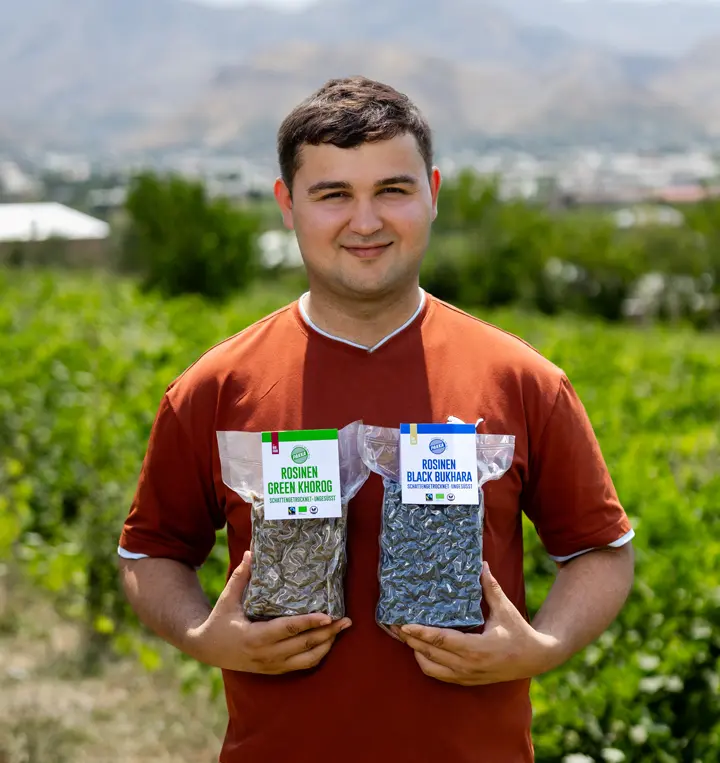 Image: Urakov Abubakr, grape producer at the Turob Bobo cooperative © Bahodirov Bahtior
Meticulous craftsmanship in Samarkand
All further processing takes place at Silk Road Organik Foods near Samarkand. There, manual care is combined with modern technology.
Up to 80 employees, mostly women, sort the raisins by hand and check them for impurities. This step is central to quality assurance and guarantees a clean, natural product.
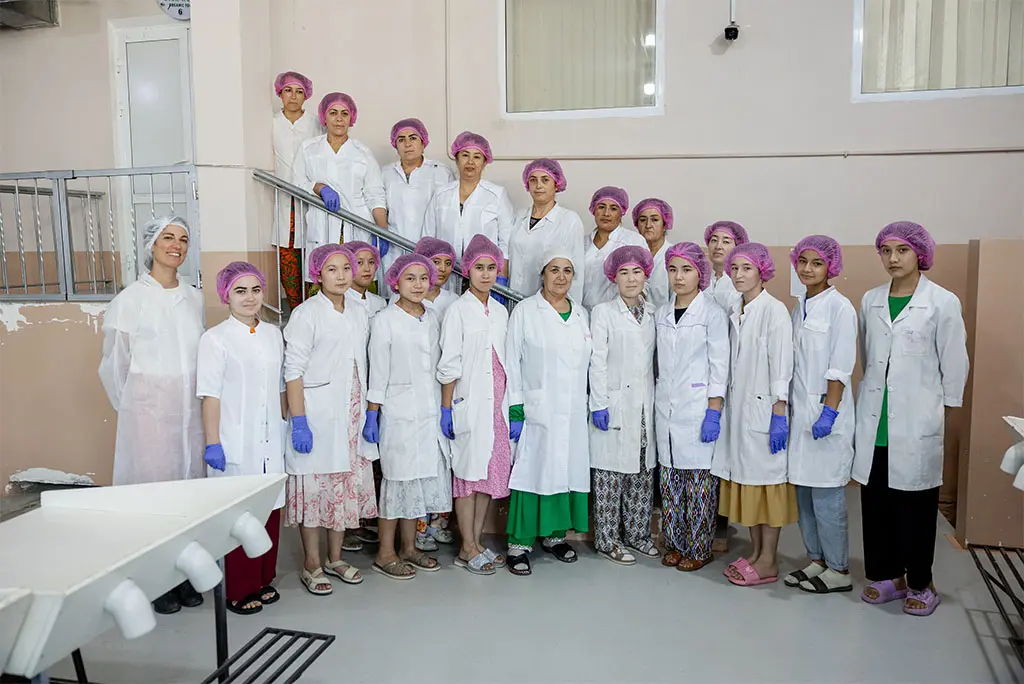
Image: Employees processing Silk Road Organik Foods © Bahodirov Bahtior
Solar thermal energy as a model for sustainable processing
A key element of the processing plant is a solar thermal system that is unique in Uzbekistan. It plays an important role, particularly during the harvest season in early summer, when large quantities of fruit need to be dried at the same time.
During the day, thermal solar collectors provide the heat for drying. At the same time, a stone storage tank is heated underground. The stones absorb the heat and store it. At night, they release the stored energy again. Fans are used to distribute the heat evenly throughout the drying rooms. This allows the drying processes to run around the clock – even without direct sunlight.
The plant generates the warm air required for drying largely independently of external energy sources, reducing its dependence on the unstable power grid. In addition, a photovoltaic system covers the production facility's electricity requirements.
This combination of solar thermal energy, stone storage and photovoltaics reduces long-term operating costs, increases environmental sustainability and serves as a model project for climate-friendly food processing in Central Asia.
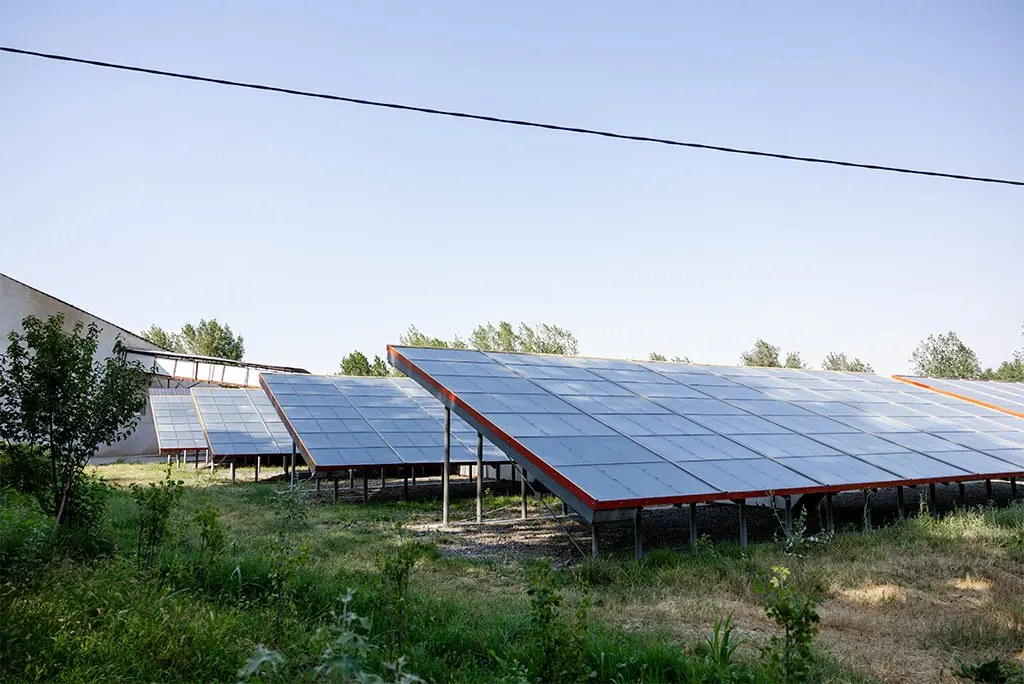
Image: Solar thermal system at Silk Road Organik Foods. © Bahodirov Bahtior
Black Bukhara raisins and green Khorog raisins are prime examples of the combination of traditional cultivation, careful craftsmanship and modern, sustainable technology. They are the expression of a regionally anchored value chain – from the vineyards around Samarkand to the Pakka webshop.