It’s Time to Make Women’s Invisible Work in Agriculture Visible
In Georgia, the Pakka Foundation is currently implementing the project “Enhancing Georgia’s Agricultural Competitiveness: Sustainable Hazelnut and Almond Agroforestry in Kakheti and Samegrelo”, funded by the Austrian Development Agency (ADA) as part of International Partnerships Austria. The project aims to enhance the competitiveness and sustainability of the hazelnut and almond sectors in Georgia through improved post-harvest management, strengthened value chains, and the promotion of climate-smart and organic agroforestry practices. Gender equality and social inclusion are key cross-cutting aspects of the project, addressing gender and social-related risks identified at the local level.
Across hazelnut and almond-growing regions in Georgia, women play an active role. They contribute to nearly every stage, from production over harvesting, to post-harvest handling and processing. Thereby, they directly influence product quality and marketability. However, despite their significant contribution, women are still rarely recognized as farmers, decision-makers or economic actors.
Limited access to land, machinery, finance, and tailored technical support further constrain women’s opportunities. Care responsibilities and physically demanding post-harvest tasks place an additional burden on women. Moreover, there is a clear link between limited local economic opportunities and women’s migration abroad, which often becomes a coping strategy rather than a choice, reflecting the lack of dignified and locally available prospects.
At the same time, there is potential for change. Where women have access to assets and knowledge, they demonstrate strong technical and leadership capacity, especially visible among women engaged in almond production. Investing in women’s skills, reducing labor burdens through appropriate technologies and creating paid roles can strengthen both gender equality and agricultural competitiveness. The challenge is not capacity, but it is access.
Field response reaffirms the importance of gender-responsive agricultural programming. Within its available resources, the project will play a significant role in advancing women’s empowerment. Moving beyond participation toward structural empowerment is essential for building inclusive, resilient and sustainable value chains. The project is committed to promoting women’s engagement in agriculture, because when women’s work is recognized, supported and valued, agriculture works better for households, communities and markets alike.
We thank ADA, Christian Schober, Gottfried Traxler, Mzevinar Jojua, Giorgi Vasadze, Ashish Kapur, Sopiko Babalashvili and Dorothee Lötscher, alongside CaucasNuts, all farmers and staff members of NCC and Pakka Georgia, for making this project happen.
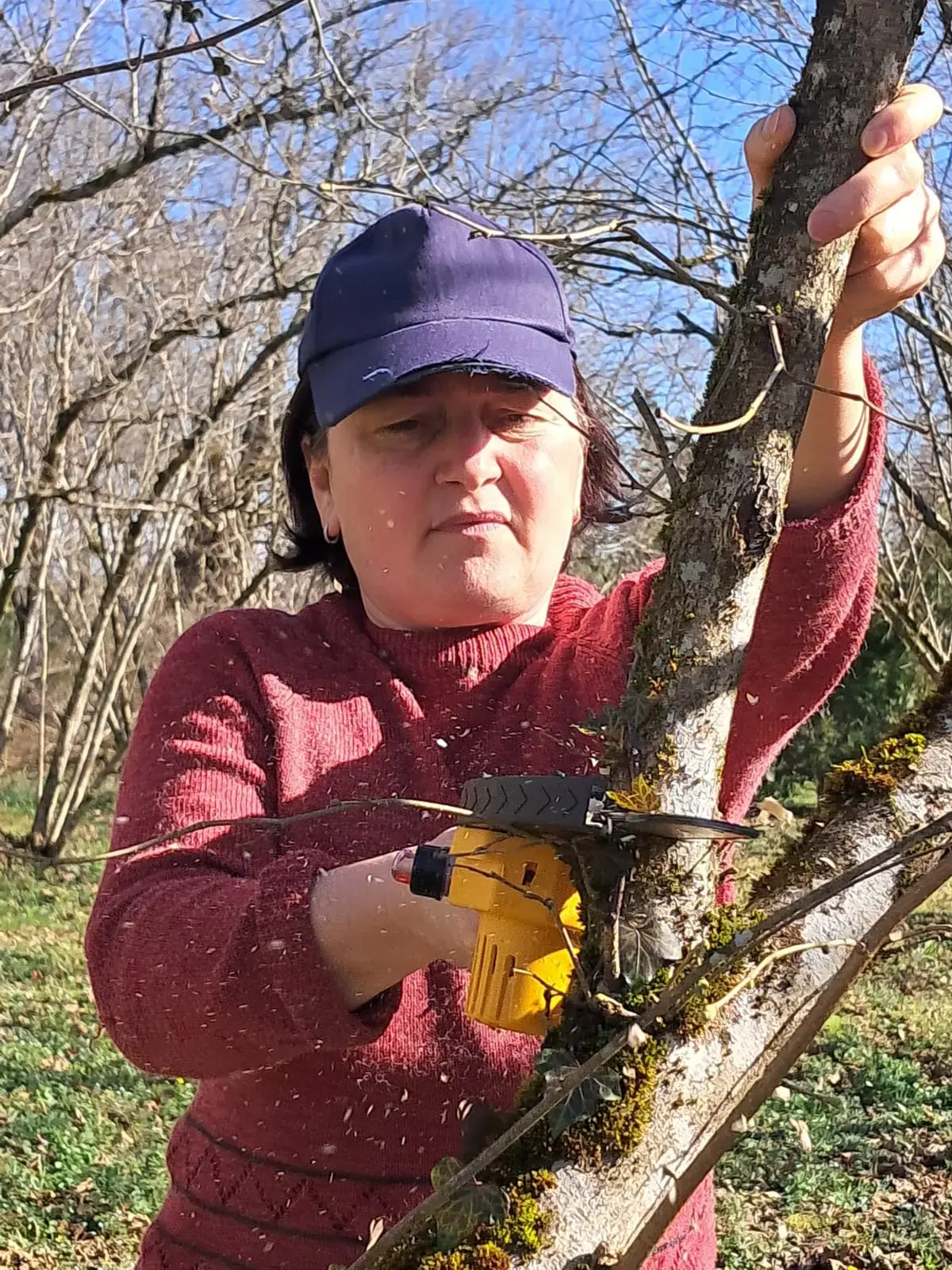
Photo: Hazelnut farmer Lela Gamisonia, member of the CaucasNut organic hazelnut association, Georgia.

International Partnerships Austria funded by ADA